
Delving into the realm of Life Insurance Quotes: Term vs Whole Life Explained, this piece aims to shed light on the nuances of these insurance options, offering a comprehensive yet approachable guide for readers.
The following paragraphs will delve into the specifics, providing a detailed comparison between term and whole life insurance.
Term Life Insurance
Term life insurance is a type of life insurance that provides coverage for a specific period, typically ranging from 10 to 30 years. If the policyholder passes away during the term, the beneficiaries receive a death benefit. However, if the policyholder outlives the term, there is no payout.
Features of Term Life Insurance
- Lower premiums compared to whole life insurance.
- Offers coverage for a specific term, making it more affordable for young families or individuals.
- Simple and straightforward coverage without cash value accumulation.
- Flexibility to choose the coverage period based on individual needs.
Situations where Term Life Insurance is More Suitable
- Young families with limited budgets looking for affordable coverage.
- Individuals with specific financial obligations that will decrease over time, such as mortgage payments or children's education expenses.
- People who want to supplement their existing whole life insurance policy for a specific period.
Whole Life Insurance
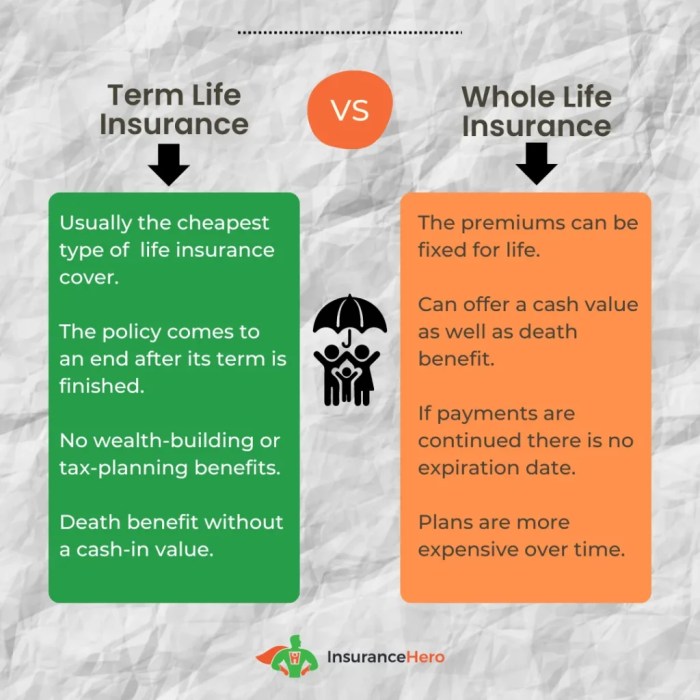
Whole life insurance is a type of permanent life insurance that provides coverage for the entire lifetime of the insured, as long as premiums are paid. In addition to the death benefit, whole life insurance also includes a cash value component that grows over time.
This cash value can be borrowed against or withdrawn by the policyholder.
Benefits of Whole Life Insurance
- Provides coverage for the entire lifetime of the insured
- Builds cash value over time
- Offers guaranteed premiums and death benefits
- Can serve as an investment and savings vehicle
Differences Between Whole Life Insurance and Term Life Insurance
- Term life insurance provides coverage for a specific term, usually 10, 20, or 30 years, while whole life insurance covers the insured for their entire life.
- Whole life insurance includes a cash value component that grows over time, while term life insurance does not accumulate any cash value.
- Whole life insurance premiums are typically higher than term life insurance premiums, but they remain level for the life of the policy, unlike term life insurance premiums which increase with age.
- Term life insurance is usually more affordable and straightforward, making it a popular choice for young families or those on a budget.
Scenarios Where Whole Life Insurance Is a Better Option
- For individuals looking for lifelong coverage and the ability to build cash value over time, whole life insurance is a suitable option.
- Whole life insurance can be beneficial for estate planning purposes, providing a tax-free death benefit to beneficiaries.
- If someone wants to supplement their retirement savings with a tax-advantaged investment vehicle, whole life insurance can serve as a valuable asset.
Premiums and Coverage
When it comes to life insurance, understanding how premiums are calculated and the coverage provided is crucial in making the right decision for your financial security.
Term Life Insurance Premiums
Term life insurance premiums are typically lower compared to whole life insurance because they are designed to cover a specific period, such as 10, 20, or 30 years. The premiums are based on factors like age, health, coverage amount, and term length.
Generally, the younger and healthier you are, the lower your premiums will be
Whole Life Insurance Premium Structure
Whole life insurance premiums are higher than term life insurance because they provide coverage for your entire life as long as premiums are paid. The premiums are calculated based on factors like age, health, coverage amount, and the insurer's expenses and profit margin.
Additionally, a portion of the premium goes towards building cash value within the policy.
Comparison of Coverage
Term Life Insurance
Provides coverage for a specific term, such as 10, 20, or 30 years. Once the term ends, the coverage ceases unless renewed or converted to a permanent policy. It is typically more affordable and offers higher coverage amounts.
Whole Life Insurance
Offers coverage for your entire life and includes a cash value component that grows over time. It is more expensive but provides lifelong protection and can also serve as an investment vehicle.
Cash Value and Investment
When it comes to whole life insurance, one key feature that sets it apart from term life insurance is the cash value component. This cash value grows over time as you pay your premiums, offering a form of savings within the policy.
Cash Value Component
The cash value in a whole life insurance policy is essentially a savings account that is funded by a portion of your premiums. It grows at a guaranteed rate set by the insurance company, providing a source of funds that policyholders can access during their lifetime.
- Policyholders can borrow against the cash value of their whole life insurance policy. This can be a useful source of funds for emergencies, education expenses, or even as a supplement to retirement income.
- Alternatively, policyholders can choose to withdraw the cash value, although this may reduce the death benefit payable to beneficiaries.
- Some policyholders opt to use the cash value to pay premiums in later years, essentially turning the policy into a self-sustaining asset.
Flexibility and Customization
When it comes to life insurance, flexibility and customization are key factors to consider. Let's explore how both term and whole life insurance options offer unique opportunities for tailoring your coverage to fit your specific needs.
Term Life Insurance Coverage Duration
Term life insurance provides flexibility in terms of coverage duration. Policyholders can choose the length of coverage, typically ranging from 10 to 30 years. This allows individuals to match their coverage period with specific financial obligations, such as mortgage payments or children's college tuition.
Customization Options with Whole Life Insurance
Whole life insurance policies offer a range of customization options. Policyholders can adjust the death benefit amount, premium payment schedule, and even add riders for additional coverage, such as critical illness or disability benefits. These customization features allow individuals to tailor their policy to meet their unique financial goals and protection needs.
Comparing Flexibility Between Term and Whole Life Insurance
While term life insurance offers flexibility in coverage duration, whole life insurance provides a higher level of customization through various policy options and riders. Term life insurance may be more straightforward and cost-effective for those seeking temporary coverage, while whole life insurance offers a long-term solution with customizable features to adapt to changing financial circumstances.
Summary
In conclusion, Life Insurance Quotes: Term vs Whole Life Explained navigates the complexities of insurance choices, leaving readers with a better understanding of which option might suit their needs best.
Questions Often Asked
How are premiums calculated for term life insurance?
Premiums for term life insurance are typically calculated based on factors such as age, health, coverage amount, and term length.
Can whole life insurance serve as an investment vehicle?
Yes, whole life insurance can have a cash value component that grows over time and can be used as an investment.
Is term life insurance more flexible than whole life insurance?
Term life insurance offers flexibility in coverage duration, while whole life insurance provides customization options for policyholders.